where we used to swim [2019]
8 min. | 2k | 5.1 | Germany, Iran
streaming on dafilms
Synopsis
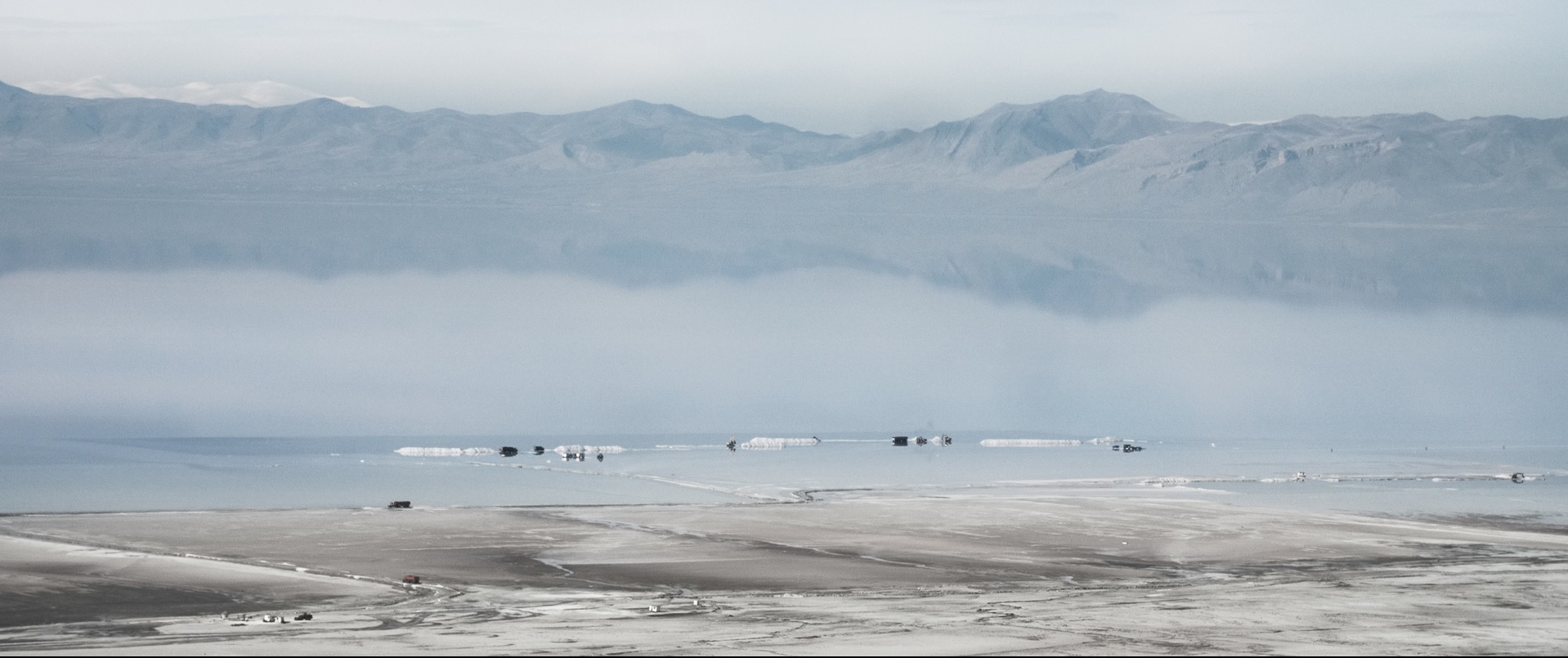
Lake Urmia in Northern Iran was once the largest lake in the Middle East. But human influence set its course, and brought upon a devastating drought that the lake could not withstand. Today, just 5% of the original lake remains. The majority of the land is now barren and covered by salt.
This cinematic essay observes the places of present and past, and weaves a new narration with fragments of identity and memory.
Awards
Sustainability Award – 26. Kurzfilmwoche Regensburg, Germany
Honorable Mention – 19. Innsbruck Nature Film Festival, Austria
Credits
director, writer, cinematographer, sound recordist, producer | Daniel Asadi Faezi
narrator | Dariush Gigloo
editor | Narges Kalhor
re-recording mixer | Andrew Mottl
color grading | Nicholas Coleman – OASYS Digital
title design | Paul Rutrecht
translation | Isabelle Heinemann
distributor | Daniel Asadi Faezi
Festivals
62. DOK Leipzig, Germany
13. KFFK Cologne, Germany
39. FILMSCHOOLFEST Munich, Germany
26. KURZFILMWOCHE Regensburg, Germany
12. GO SHORT Nijmegen, Netherlands
17. VIENNA SHORTS, Austria
13. LEIDEN SHORTS, Netherlands
21. KUK Kurzfilmtage Schweinfurt, Germany
40. ODENSE Shortfilm Festival, Denmark
09. KYIV International Shortfilm Festival, Ukraine
26. Film Festival della Lessinia, Italy
49. SEHSÜCHTE Berlin, Germany
36. KURZFILMFESTIVAL Hamburg, Germany
20. FESTIVAL DE CINE ALEMÁN Buenos Aires, Argentina
03. CINEMAFEST Orvieto, Italy
14. GERMAN CURRENTS Film Festival L.A., USA
41. VILLEURBANNE Festival du Film Lyon, France
36. WARSAW International Film Festival, Poland
25. FESTIVAL DU CINÉMA ALLEMAND, Paris, France
16. SEDICICORTO International Filmfestival Italy
13. IMAGINE SCIENCE Film Festival New York, USA
19. INNSBRUCK Nature Filmfestival, Austria
20. ESCALES DOCUMENTAIRES La Rochelle, France
36. INTERFILM International Shortfilm Festival Berlin, Germany
24. PÖFF Black Nights Tallinn, Estonia
06. CINÉMA JEUNE PUBLIC Lausanne, Switzerland
37. FESTIVAL International du Film de Montagne d’Autrans, France
21. IZMIR Shortfilm Festival, Turkey
13. THIS HUMAN WORLD Festival Vienna, Austria
09. LIBERATION DocFest, Bangladesh
13. STRANGLOSCOPE Experimental Filmfestival, Rio de Janeiro, Brazil
03. FIELD RECORDINGS, Rotterdam, Netherlands
10. CINEGLOBE Festival CERN, Switzerland
19. KFFK Cologne, Germany
32. KURZFILMWOCHE Regensburg, Germany
Additional Screenings
Bellevue di Monaco, 2025
#60 Labocine July Issue, 2021
Next Generation Short Tiger – Screening at Marche du Film Festival de Cannes, 2020
Press
The dried tears of Lake Urmia in northern Iran are for sale – salt in plastic bags at the roadside. Once the biggest lake in the Middle East, only a fraction of it is left today. This is its elegy, presenting both its former splendour and its state today. Wavering between factuality and melancholy, the film finally opts for a pessimistic view of society. The dying lake becomes a symbol.
-Carolin Weidner DOK Leipzig
A love poem, a love song to a place that disappeared – once one of the biggest lakes in the Middle East, vanished and turned almost complete into a salt desert – lake Urmia. This poetic essay embarks from the former crowded shores back in the time, when there still was water, and leads us to recent images of the scenery. The young filmmaker Daniel Asadi Faezi visualizes the mourning by arranging playful but gently the images and brings Urmia for a glimpse of the moment back to life but let us its loss resonates long after.”
-Jury Statement Innsbruck Nature Film Festival
A salt desert as a starting point for reflection on the past and visibility. An essayistic observation, memory work and political appeal. The different sources of images are arranged sensitively and confidently. The camera impresses with excellently composed, emphatic images that are elegantly mounted and set to music. A monumental memorial to the disappearance of Lake Urmia, once the largest lake in Iran, which today measures only 5% of its original size.
–Jury Statement Kurzfilmwoche Regensburg
As archive footage blends with contemporary explorations, the film deals not only with the environmental changes within a society but also the social and political aspects that echo these changes. A reflection on identity and memory, the past and the present and an evocation of a society that is trying to reconcile these states of being, Where We Used To Swim is a moving and beautiful piece of work
–PÖFF Shorts, Tallinn